Natural Stone Cleaning in Miami
Marble, travertine, limestone, granite and terrazzo cleaned with pH-neutral chemistry and the right pads, then sealed so the stone stays protected. Most of this work is in lobbies, elevator landings and restrooms.
Cleaning Stone Without Damaging It
Walk into almost any condo tower or Class A office lobby in Miami and you'll find stone underfoot. Marble and travertine look great and last for decades, but they're softer and more chemically sensitive than most people realize. Both are made mostly of calcium carbonate, which reacts with acid. A splash of lemonade, an acidic bathroom cleaner or the wrong all-purpose spray can leave a dull, rough spot called an etch mark.
That's why stone needs its own approach. We clean marble, travertine, limestone, granite, terrazzo and slate with stone-safe, pH-neutral products and soft pads, and we keep away from the acidic and high-alkaline cleaners that work fine on ceramic tile but slowly wear stone down. Where the stone is porous, we finish by sealing it so spills stay on the surface long enough to be wiped up.
If a stone floor is already scratched, etched or dull across the whole surface, cleaning alone won't be enough. That's when we move on to floor polishing or full floor restoration.
What Our Stone Cleaning Includes
Stone Identification
We confirm whether the floor is marble, travertine, granite, limestone or something else, and whether the finish is polished or honed. Everything else depends on this.
Dry Soil Removal
Sand is abrasive and Miami has plenty of it. We dust mop and vacuum thoroughly before any wet cleaning so grit doesn't scratch the surface.
pH-Neutral Deep Cleaning
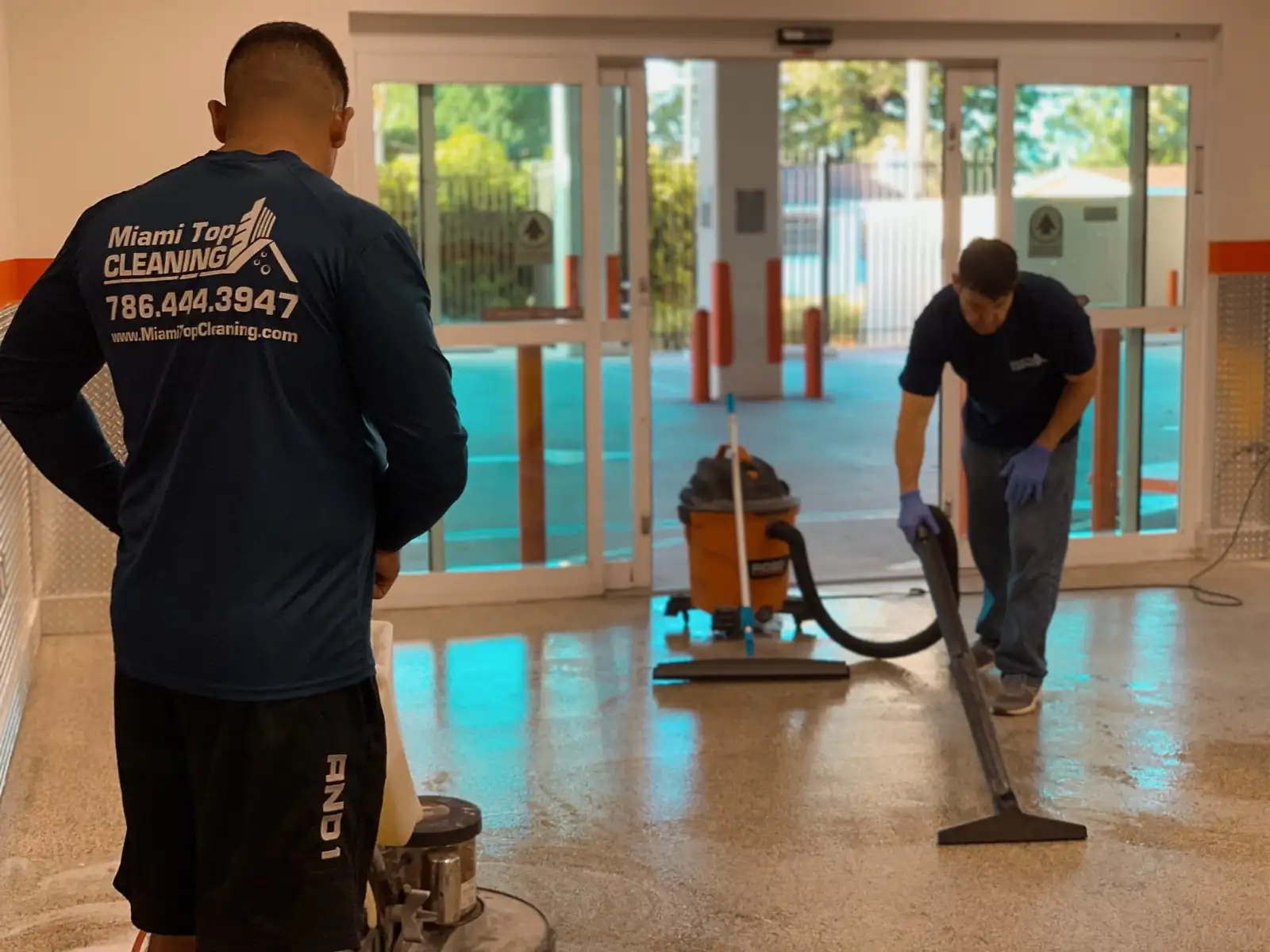
Stone-safe cleaner is worked in with a soft pad or brush, then recovered with a wet vacuum to lift dirt out of the pores and joints.
Grout Line Cleaning
Joints between stone tiles are scrubbed with brushes suited to the stone, so they come clean without scratching the tile edges.
Penetrating Sealer
On porous stone like travertine, limestone and many marbles, a penetrating sealer slows staining from water, oil and drinks.
Care Plan
We recommend daily products and methods for your cleaning staff and set a schedule for periodic deep cleaning.
Types of Stone We Clean
We work with the natural stone found most often in South Florida buildings:
- Marble. Polished and honed, in lobbies, elevator landings and restrooms.
- Travertine. Filled and unfilled, often in condo common areas and around pools.
- Limestone. Including the coral and keystone varieties common in Florida architecture.
- Granite. Harder and more acid resistant, common at building entries and on counters.
- Terrazzo. Marble chips set in cement or epoxy, found in many older Miami schools, hospitals and public buildings.
- Slate. Textured stone used in entryways and some restaurant floors.
Why Stone Gets Dull
Most dull stone floors aren't dirty in the usual sense. They've been worn down. Grit from shoes acts like sandpaper on a polished surface, and every acidic or harsh cleaner takes a little more of the shine with it.
Wax and acrylic coatings make things worse over time. They look shiny for a few weeks, then trap dirt, scuff and yellow, and eventually have to be stripped off the stone. Good stone care is mostly about avoiding that cycle: walk-off mats at the entrances, daily dust mopping, a neutral cleaner instead of a general one, and periodic professional cleaning for what daily care misses. When we take over a stone floor, we often strip old coatings off first.
Sealing: What It Does and Doesn't Do
A penetrating sealer soaks into the stone and slows down how fast it absorbs liquids. It helps a lot with oil, coffee and water stains on porous stone. It won't stop etching, because acid reacts with the stone itself whether it's sealed or not, and it doesn't add shine.
In busy commercial areas, sealer generally needs to be reapplied every one to two years. We test how the stone absorbs water to tell when it's time, rather than resealing on a fixed calendar.
Our Stone Cleaning Process
Every stone job starts with a close look at the floor. We check the finish, look for existing etching, cracks and lippage (uneven tile edges) and find out whether the floor has a coating on it. A small test spot shows us how the stone responds before we clean the whole area.
Then we remove dry soil, apply a pH-neutral stone cleaner and scrub with pads that won't scratch the finish. Dirty solution is pulled up with a wet vacuum instead of being left to dry on the floor. The floor is rinsed with clean water, dried and inspected under good light.
If the stone needs sealing, we wait until it is completely dry, because sealing damp stone traps moisture. After sealing, we generally recommend keeping traffic off the floor for about six hours so the sealer can set. You'll get written care instructions for whoever cleans the floor day to day.
Get a Stone Cleaning Quote
Tell us what kind of stone you have, where it is and roughly how many square feet. Photos of any stains or dull spots help.
Request a Quote(786) 444-3947Floor Care Services
Our Other Services
Why Miami Top Cleaning
- 100% On-Staff Employees
- No Subcontractors
- Locally Owned & Operated
- Fully Licensed & Insured
Natural Stone Cleaning FAQs
What should we use to clean marble every day?
A pH-neutral stone cleaner, diluted as directed, and a clean microfiber mop. Avoid vinegar, bleach, ammonia, citrus cleaners and general bathroom cleaners. Dust mop first so you're not dragging sand across the surface.
Can you remove etch marks from marble?
Light etching on polished marble can often be polished out. Deeper etching, or etching across a large area, usually needs honing and repolishing. Our floor restoration page explains how that works.
Should stone floors be waxed?
We don't recommend it. Wax and acrylic finishes sit on top of the stone, scratch easily, trap dirt and turn yellow. If your stone floor has been waxed, we can strip it and switch it to proper stone care.
How often does stone need to be sealed?
Busy commercial floors usually every one to two years. Quiet areas can go longer. A simple water drop test shows when the stone is starting to absorb again.
Do you clean stone countertops and walls too?
Yes. While we're on site we can clean stone counters, vanities, wall cladding and stairs with the same stone-safe methods.
Natural Stone Cleaning Service Areas
Want Your Stone Floors Looking Their Best?
Get a free quote for marble, travertine, granite and terrazzo cleaning anywhere in Miami-Dade or Broward.