Commercial Floor Polishing in Miami
Diamond polishing for concrete, terrazzo and marble, and high-speed burnishing that brings back the shine on finished floors between strip and wax cycles.
Two Kinds of Floor Polishing
Polishing means different things depending on the floor. On a VCT floor with finish on it, polishing means burnishing: running a high-speed machine over the finish to smooth it and bring back a wet look. On concrete, terrazzo and marble, it means refining the surface of the floor itself with diamond abrasives until it reflects light. No coating is involved. The shine comes from the floor.
We do both. Burnishing is usually part of a regular maintenance schedule. Diamond polishing is more of a project, typically done when a floor is new, after a renovation or when stone or terrazzo has gone dull and cleaning no longer brings it back.
Our crews are trained Miami Top Cleaning employees, and we schedule polishing for nights and weekends whenever the space is busy during the day.
Our Floor Polishing Services
High-Speed Burnishing
Burnishers heat and smooth floor finish at high speed, removing light scuffs and restoring gloss on VCT and other finished floors.
Concrete Polishing
Progressive diamond grinding and honing, a densifier to harden the surface, then polishing to the sheen you want, from satin to high gloss.
Polished Concrete Upkeep
Cleaning and periodic re-polishing with diamond-impregnated pads keep existing polished concrete from going flat.
Terrazzo Polishing
Diamond polishing instead of topical coatings, which tend to yellow on terrazzo. The shine lasts longer and is easier to maintain.
Marble Polishing
Polishing compounds and pads bring back the reflective finish on marble lobbies and landings dulled by traffic.
Sheen Matching
When only part of a floor is polished, we match the sheen of the surrounding area so you don't end up with a patchwork.
Where Floor Polishing Makes Sense
We polish floors in many kinds of commercial space, including:
- Showrooms and retail stores. Polished concrete and stone that have to look good under display lighting.
- Office lobbies and elevator landings. Marble and terrazzo that set the first impression.
- Warehouses and light industrial spaces. Densified, polished concrete that sheds less dust and is easier to clean.
- Schools and public buildings. Terrazzo hallways that have been coated and stripped for years.
- Restaurants and bars. Polished concrete that handles spills and heavy traffic.
- Condo common areas. Marble and terrazzo in lobbies, hallways and clubhouses.
Burnishing Between Strip and Wax Cycles
A freshly waxed floor looks great for a few weeks. Then foot traffic starts to dull and scratch the top layer. Burnishing on a regular schedule, often weekly or every other week in busy areas, smooths the finish back out. It's one of the cheapest ways to make a strip and wax job last longer.
Burnishing only works on a clean floor. Burnish over dirt and you bake it into the finish. We dust mop first and, where needed, scrub before the burnisher goes down.
Why Polished Concrete Is Popular in South Florida
Concrete is everywhere in new construction around Doral, Wynwood and the warehouse districts, and polishing it often costs less than covering it. A polished, densified slab doesn't need wax, stands up to carts and forklifts and has no grout lines or carpet fibers to hold dust. It also deals with humidity better than many floor coverings, since there's nothing on top to lift or delaminate.
It isn't maintenance free, though. Sand and grit dull it over time, especially near entrances. Regular dust mopping, a neutral cleaner and periodic polishing with diamond pads keep it looking the way it did the day it was finished.
How Diamond Polishing Works
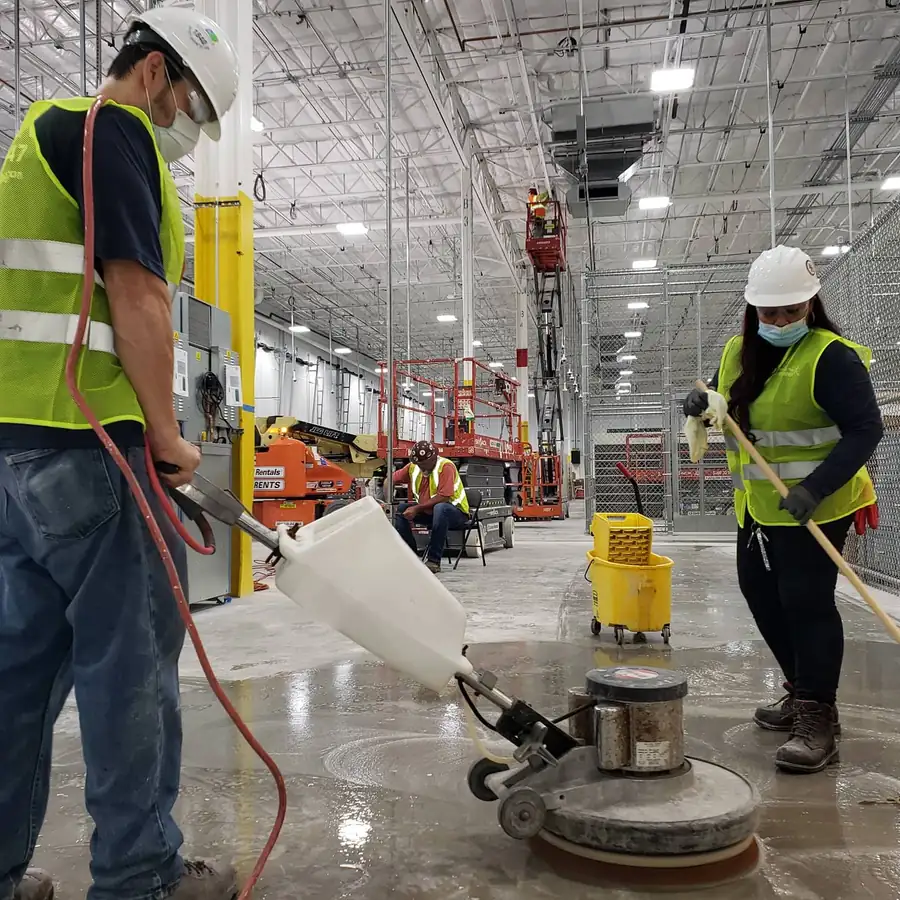
Diamond polishing is done in stages. We start with coarser diamond tooling to remove coatings, stains and surface damage, then move through progressively finer grits, each pass taking out the scratches left by the one before. On concrete, a densifier goes on partway through to harden the surface. The number of passes depends on the starting condition and the gloss level you're after.
Most polishing is done wet to keep dust down, with the slurry picked up as we go. When the floor reaches the target sheen, we clean it, apply a protective treatment if the floor calls for one and walk it with you.
Not every floor can reach a mirror finish. Concrete with heavy patching, cracks or soft spots, and stone with deep damage, have visible limits. We polish a test area first so you can see the result before we commit to the whole floor.
Get a Floor Polishing Quote
Let us know the floor type, its current condition and the finish you want. We'll recommend burnishing, diamond polishing or a mix of the two.
Request a Quote(786) 444-3947Floor Care Services
Our Other Services
Why Miami Top Cleaning
- 100% On-Staff Employees
- No Subcontractors
- Locally Owned & Operated
- Fully Licensed & Insured
Floor Polishing FAQs
What is the difference between burnishing and polishing?
Burnishing smooths a floor finish, the coating on top of VCT and similar floors, with a high-speed machine. Diamond polishing refines the floor material itself, such as concrete, terrazzo or marble, and doesn't rely on a coating.
How long does concrete polishing take?
It depends on the size, the starting condition and the gloss level. A small room can sometimes be finished in a night or two. Larger floors are usually done in sections over several nights, and you'll get a timeline with the quote.
Is polished concrete slippery?
Clean, dry polished concrete generally has good traction, often better than a waxed floor. It can get slippery when wet or when dust and oil build up, which is why regular cleaning and entry mats matter.
Can terrazzo that has been waxed for years be polished?
Usually, yes. We strip the old coatings first, then diamond polish the terrazzo itself. Cracks, holes and missing chips get repaired as part of a floor restoration before the final polish.
How often does a floor need to be polished?
Burnishing is often weekly or every other week in busy areas. Diamond-polished floors may only need re-polishing every year or two, depending on traffic and how they're cleaned in between.
Floor Polishing Service Areas
Ready to Bring Back the Shine?
Get a free quote for burnishing, concrete polishing or terrazzo and marble polishing anywhere in Miami-Dade or Broward.